
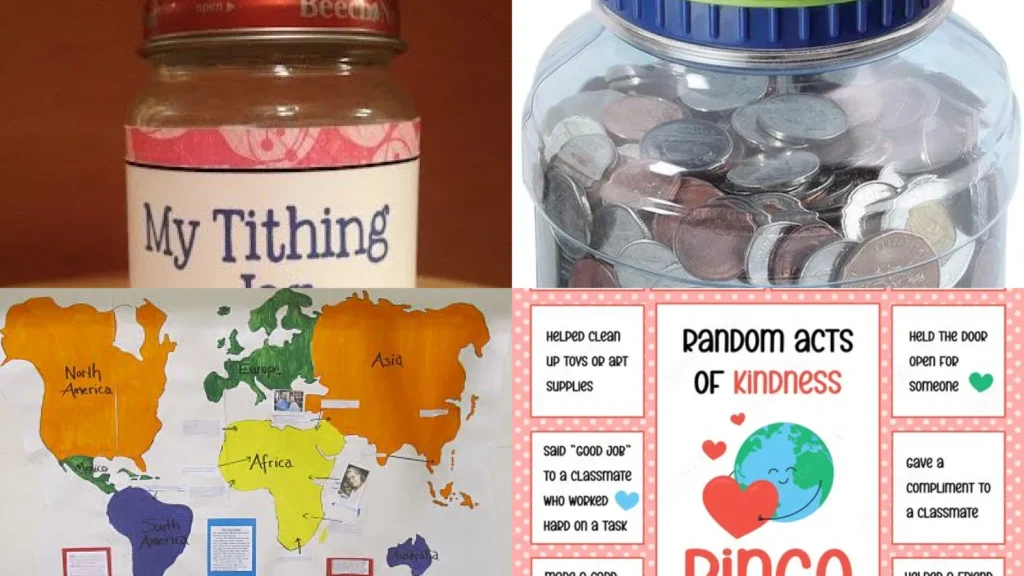

Sunday school lessons about giving are great, but most of them end the second everyone walks out the church doors. That’s the part nobody talks about!
The usual fix is one plain jar labeled TITHE sitting on a shelf collecting dust. It looks boring, it gets ignored and the whole point gets lost, lol!
This list is here to fix that. Hundreds of pins got scrolled through to find the jars, charts and little projects that kids actually notice and want to touch.
Only the doable ones made the cut. Nothing here needs fancy tools or a trip to three different stores.
Below you’ll find jars to decorate, charts to fill in and a few bigger projects for the whole family to try together. Pick one or mix a few and watch how fast the habit sticks.
TITHING JAR IDEAS KIDS
Mason Jar Tithing Station

A mason jar tithing station is the easiest place to start if you’re new to this whole idea. Grab three jars from the pantry and a permanent marker and you’re basically done.
Set them up somewhere kids pass every day, like the kitchen counter. The habit forms faster when the jars are right there staring back at everyone.
- Weeknight easy setup
- Three jars from the pantry work
- Marker is the only tool needed
Rainbow Painted Giving Jars

These rainbow painted giving jars turn a chore into an actual craft afternoon. Acrylic paint in bright colors goes right onto the glass, no primer needed.
Kids get to pick their own color combo, which sounds small but makes a huge difference. Suddenly it’s their jar, not just a jar on the counter.
- Craft aisle basics only
- Acrylic paint sticks to glass
- Dries overnight on the counter
Chalkboard Label Tithe Jars

Chalkboard label tithe jars are for anyone who likes to change things up. Paint a small chalkboard patch on the front and swap the wording whenever the mood strikes.
One week it might say GIVE, the next it might say CHURCH FUND or MISSIONS. That flexibility keeps the whole thing feeling fresh instead of stale.
Read also: 16+ Welcome Bag Ideas For Church Guests That Wow
- Never the same jar twice
- Chalkboard paint from the craft aisle
- Wipes clean with a damp cloth
Three Jar Money System

The three jar money system splits every dollar into give, save and spend before it disappears into a piggy bank black hole. It’s simple math kids actually understand.
Label each jar clearly so there’s no confusion at allowance time. This one teaches the habit before the lecture ever has to happen.
- Teaches without a lecture
- Works with any allowance amount
- Three jars, one clear rule
Personalized Name Tithing Jars

Personalized name tithing jars make giving feel personal instead of like another household rule. Write each kid’s name across the front in paint pen or vinyl letters.
That kind of ownership is exactly the goal here.
- Vinyl letters or paint pen
- Personal touch kids notice fast
- No two jars ever match
Farmhouse Style Tithing Jars

Farmhouse style tithing jars use burlap, twine and a little stenciled scripture for a look that fits right on a kitchen shelf. They don’t scream craft project at all.
Wrap a strip of burlap around the jar and tie it off with jute. It’s the kind of decor that works year round, not just during a giving push.
- Shelf ready decor style
- Burlap scrap from the craft bin
- Jute twine ties it together
Kids Coin Counting Jar

A kids coin counting jar turns loose change into an actual lesson in math and patience. Clear glass lets everyone watch the total climb week after week.
Add a paper strip with dollar markers taped to the side. Watching the coins reach each line is honestly more exciting than it sounds!
- Watch the total climb
- Clear glass shows the progress
- Paper markers taped up the side
DIY Ribbon Wrapped Jars

DIY ribbon wrapped jars are the fastest project on this whole list. Wrap grosgrain ribbon around the neck of the jar and secure it with hot glue.
Ten minutes, one glue gun and it looks like something from a boutique shelf. No shame in taking the shortcut, lol!
- Boutique look zero effort
- Grosgrain ribbon from the sewing box
- hot glue holds it in place
Bible Verse Giving Cards

Bible verse giving cards give kids something to hold onto beyond just dropping coins in a jar. Print short verses about generosity onto index cards and tuck one behind each jar.
Read also: 17+ Creative Prayer Request Board Ideas That Inspire
Rotate the cards weekly so the message never gets stale. These are some of the simplest giving lessons for kids ideas out there and they cost almost nothing to put together.
- Rotates every single week
- Index cards from the office drawer
- Verses printed at home for free
Weekly Giving Lesson Chart

A weekly giving lesson chart keeps everyone on the same page without turning into a nagging session. One short topic per week, checked off as it’s discussed.
Read also: 12+ Meaningful Family Devotional Ideas That Transform Mornings
Tape it to the fridge where it actually gets seen. Consistency matters way more here than fancy wording ever will.
- Fridge chart, zero nagging
- One topic covers a whole week
- Checkboxes make progress visible
Sharing Storybook Reading Corner
A sharing storybook reading corner pairs a cozy little nook with books about generosity and kindness. Toss in a beanbag, a small basket of books and call it done.
Read also: 20+ Sacred Family Altar Ideas Home Decor Transforms
Rotate titles from the library every couple weeks so it never feels repetitive. Reading about sharing tends to stick longer than any lecture, haha!
- Cozy corner does the teaching
- Library books rotate for free
- Beanbag from the thrift store
Neighborhood Helping Hands Basket

A neighborhood helping hands basket keeps a running list of small tasks for elderly neighbors or busy coworkers, one of the easiest serving family ideas monthly to actually pull off.
Fill it with things like raking leaves, walking a dog or dropping off a meal. Pick one task a month and let everyone take a turn.
Small gestures apparently stick around longer than expected.
- One task, once a month
- Ideas written on scrap paper
- Takes under an hour usually
Family Prayer Mission Map

A family prayer mission map pins locations around the world onto a corkboard or printed map. Each pin represents a place, a missionary or a cause worth praying for.
It’s one of those family mission ideas that turns an abstract concept into something you can literally point at. Kids remember places better than they remember names, honestly.
- Turns prayer into a picture
- Printed map from the office
- Push pins from the junk drawer
Care Package Mission Project

A care package mission project gives everyone a hands-on task with a real destination. Pack snacks, socks and handwritten notes into a box headed somewhere specific.
Read also: 16+ Heartfelt Graduation Blessing Ideas That Move Everyone
Shoeboxes work fine and keep the cost low. There’s something about writing a note to a stranger that makes the whole project feel bigger than it is.
- Shoebox, low cost, big impact
- Shoebox from the closet works
- Handwritten notes add the heart
Thirty Day Kindness Jar

A thirty day kindness jar fills up one slip of paper at a time, one small act each day for a month straight. By day thirty the jar looks seriously full.
This is one of the simplest generosity challenge ideas because there’s no shopping list involved at all. Just paper, a jar and a little daily reminder.
- Thirty days, one jar full
- Paper slips already at home
- One act written down daily
Generosity Bingo Printable Chart

Last but definitely not least, we have this generosity bingo printable chart. Each square holds a different small act, from sharing a toy to writing a thank you note.
Fill a row, a column or blackout the whole card. Print a fresh one every month and watch the squares disappear faster than expected, haha!
- Print, play, watch it fill
- Free printable at home
- New card works every month
Just a little note - some of the links on here may be affiliate links, which means I might earn a small commission if you decide to shop through them (at no extra cost to you!). I only post content which I'm truly enthusiastic about and would suggest to others.
And as you know, I seriously love seeing your takes on the looks and ideas on here - that means the world to me! If you recreate something, please share it here in the comments or feel free to send me a pic. I'm always excited to meet y'all! ✨🤍
Xoxo Alessandra