
If your closet is full but you still feel like you have “nothing to wear,” it usually is not because you need more clothes. It’s because you don’t have enough of the right repeatable pieces. The ones that actually match your life, your body, your comfort level, your weather, and your real schedule.
Most people buy duplicates for two reasons:
- They chase the feeling of a past good outfit without understanding what made it work.
- They shop when they’re stressed, rushed, or bored, and they grab “close enough” versions that don’t fit the role.
The fix is not a stricter no-buy rule. The fix is to get clear about your go-to outfit pieces (the few items that carry your week), and to set a simple filter that stops near-duplicates before they enter your cart.
You’re going to do this in a way that feels practical, not like a personality quiz. By the end, you’ll have:
- a short list of your real outfit staples
- the specific “rules” they follow (fit, fabric, color, neckline, shoe type)
- a duplicate-proof shopping checklist that works even when you’re tempted
This won’t work if your lifestyle is changing fast (new job, postpartum, big weight fluctuations, medical needs that affect dressing). You can still use the method, but you’ll have to revisit it more often, and that can feel annoying.
Quick answer for skimmers
- Your go-to pieces are the items you reach for when you’re tired, rushed, or want to feel like yourself.
- Identify the 5 outfits you repeat most and write down the common traits (fit, fabric, neckline, shoe, layer).
- Build “outfit roles” first (work, errands, social, active, home), then pick 1-2 reliable formulas per role.
- Create a “duplicate filter”: if it fails on comfort, care, color match, or shoe compatibility, it’s not a duplicate you need.
- Stop buying items that only work with one specific top or one specific bra. That is a trap.
- Create a one-page “closet cheat sheet” so you can shop from your rules, not your mood.
- Keep a 48-hour pause for anything that looks like a duplicate.
If you only do one thing: write down your top 3 outfit formulas (like “straight jeans + knit top + jacket + sneakers”) and only buy pieces that fit one of those formulas.
The decision framework: find your go-to pieces in 4 passes
Pass 1: Find your real-life outfit roles
Forget “style” for a second. Start with the jobs your clothes must do.
Write down your top 4-6 weekly roles. Examples:
- Work in-office
- Work from home on camera
- Errands and school runs
- Social but casual (coffee, dinner at a friend’s)
- Dressier events
- Weekend active
- Home comfort that you won’t hide from the delivery person
You don’t need a separate wardrobe for each. You need reliable overlaps. But naming the roles stops you from buying random “pretty items” that do not belong anywhere.
Common mistake: building outfits for an imaginary life.
Fix: build outfits for your next 7 days.
Pass 2: Pull your “always works” items
Set a timer for 12 minutes. Open your closet. Grab the pieces you wear on repeat.
You’re looking for:
- the pants you reach for first
- the skirt you always pack for trips
- the jacket that saves boring outfits
- the shoes you keep by the door
- the knit/top you wash constantly because you wear it constantly
Put them on a bed or chair. Do not judge whether they’re trendy. If you wear them, they count.
If you struggle to see your repeats, use this cheat:
- Look at what’s in your laundry basket most often.
- Look at what you put on again right after you do laundry.
Those items are your real go-tos.
Pass 3: Spot the pattern (this is where it gets powerful)
Now write down what those “always works” items have in common.
Use these categories:
Fit pattern
- high rise vs mid rise
- cropped vs full length
- fitted vs relaxed
- waist defined vs loose
- structured vs drapey
Fabric pattern
- cotton, denim, knit, linen blends, wool blends, etc.
- thick vs thin
- clingy vs forgiving
- wrinkle-prone vs easy-care
Color pattern
- your core neutrals (not “all neutrals,” your actual ones)
- the accent colors that repeat
Comfort pattern
- what bras you can wear with it
- what shoes don’t hurt
- what fabrics itch or overheat you
Lifestyle pattern
- does it work for walking, driving, sitting on the floor, commuting, climate swings?
You’re building your personal spec sheet.
Here’s a real example of how this looks:
- “I always wear high-rise straight or wide-leg pants, full length, with a defined waist. I hate clingy fabric. I need machine washable tops. I wear white sneakers or loafers 90 percent of the time, so pants must work with flat shoes.”
That person should stop buying low-rise trousers, delicate blouses, and pants that only work with heels. Not because they’re “wrong,” but because they don’t match the pattern.
Pass 4: Turn patterns into “go-to outfit formulas”
A go-to formula is a repeatable template you can build variations of.
Pick 1-2 formulas per outfit role.
Examples:
- Work: trousers + knit top + blazer + loafers
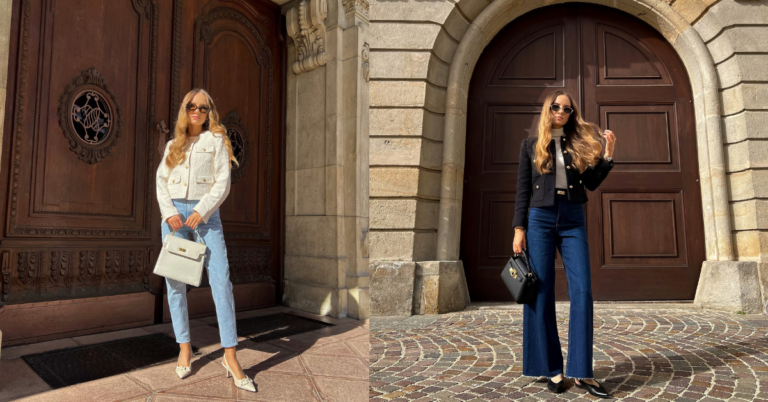
- Errands: straight jeans + tee + layer + sneakers
- Social casual: midi skirt + fitted knit + jacket + boots
- Hot weather: linen pants + tank + overshirt + sandals
- Cold weather: long skirt + sweater + coat + boots
This is the moment your closet stops being “items” and becomes “outfits.”
If you already have outfit formulas that work, you can skip the next section and jump straight to the duplicate-proof shopping rules below.
Common reasons duplicates fail (and how to stop them)
1) You bought the “same” thing in the wrong fabric
The cut looks similar on the hanger, but the fabric changes everything.
- Thin knits cling and show lines.
- Stiff fabric can feel bulky and sit weird at the waist.
- Cheap polyester can trap heat and smell faster.
Fix: write your fabric rules down.
Example: “I only like heavy cotton tees” or “I only wear denim with 1-2% stretch.”
2) You bought a duplicate in a color that doesn’t match your closet
You think you’re expanding options, but you’re actually creating an orphan item.
Fix: choose 2-3 core neutrals and stick to them for your staples.
Core neutrals are not universal. Yours might be navy, cream, and chocolate. Someone else’s might be black, gray, and white.
3) The neckline or sleeve is slightly off, so you never reach for it
Tiny differences matter because they affect comfort and confidence.
- Crew vs scoop
- sleeve length that hits at an awkward spot
- armholes that show bra
- collars that feel tight
Fix: name your “non-negotiable” neckline and sleeve types.
4) The duplicate only works with one very specific outfit
This is the silent budget killer.
If a piece needs a specific bra, a specific shoe height, and a specific top to look okay, it will sit unused.
Fix: the “3-outfit test” before you buy:
Can you make 3 outfits with things you already own, using shoes you actually wear?
5) The fit is almost right, but you keep waiting to “make it work”
Almost right is usually wrong.
Fix: set fit standards for staples:
- waist must close comfortably without sucking in
- you can sit and breathe normally
- you can move your arms freely
- you do not need a special undergarment you hate
The duplicate-proof shopping checklist
Use this every time you’re about to buy “another version” of something.
Step 1: Name the role
What outfit role does this serve?
- work
- errands
- social
- active
- home
If you can’t name the role, it’s probably not a staple. That doesn’t mean you can’t buy it, but it’s not a “go-to piece.”
Step 2: Compare it to your best version
Pull up a photo of the version you love, or check your notes.
Ask:
- Is the fit the same where it matters (waist, hips, shoulder)?
- Is the fabric equal or better for my comfort and care needs?
- Does it work with my default shoes?
Step 3: Run the “friction test”
Friction is anything that makes you avoid wearing it.
Common friction points:
- wrinkles easily
- needs hand-wash
- requires strapless bra
- rides up
- pinches at the waist
- uncomfortable shoes required
- too sheer in daylight
If the new item adds friction, it’s not a helpful duplicate.
Step 4: Run the “laundry reality test”
Be honest. Do you actually dry-clean? Do you actually steam?
This is optional. Skip it if you already know you can maintain the item.
If you hate garment care, your go-to pieces need to be easy-care. Otherwise, you’ll keep buying “aspirational” items and then wearing the same two things anyway.
Step 5: Decide if you need a replacement or a true duplicate
These are different:
- Replacement: your best version is worn out, stained, stretched, or no longer fits your life.
- True duplicate: you wear it so often you want a second one to reduce laundry stress.
A true duplicate makes sense when:
- you wear it weekly
- it fits perfectly
- it has low friction
- it supports multiple outfit roles
Everything else is just more clutter.
A simple system to identify your go-to pieces (without overthinking)
The 10-outfit capture
Over the next 10 times you get dressed (or the next 10 days), take a quick mirror photo. No one sees it but you.
Then write down:
- what you wore
- what you loved
- what you adjusted all day (tugging, pulling, fixing)
You will see patterns faster than you expect:
- the same jeans
- the same jacket
- the same shoe
- the same neckline
Those repeating items are your go-to pieces. They are already proven.
The “why it worked” notes
For your top 5 outfits, write one sentence each:
- “This worked because the waist is defined and the fabric doesn’t cling.”
- “This worked because the shoes are comfortable and match my outerwear.”
- “This worked because I can wear a normal bra and move all day.”
That sentence becomes your filter.
Build your personal “core wardrobe” list
This is not a capsule wardrobe with strict numbers. It’s your core list of pieces that make outfits happen.
Start with categories:
Bottoms (2-4)
- your best jeans silhouette
- your best trousers silhouette
- your best skirt silhouette
Tops (4-8)
- your best tee silhouette
- your best knit silhouette
- one polished top for work or social
- one layering top (thin knit or tee)
Layers (2-4)
- one casual layer (denim jacket, cardigan, overshirt)
- one polished layer (blazer, structured coat)
- one weather layer (raincoat, warm coat)
Shoes (2-4)
- your default everyday shoe
- your slightly dressier shoe
- your weather shoe
Optional pieces
- one outfit “hero” you love (a statement skirt, a great coat, a dress you feel amazing in)
There is a trade-off here with no perfect solution: the tighter you keep your color palette and silhouettes, the easier it is to get dressed, but the more repetitive it can feel. Some people love that calm. Some people feel bored. You get to choose.
Variations: pick the version that matches your life
Variation 1: If you’re busy and want the fastest results
- Identify your top 3 outfit formulas.
- Duplicate only one item: your most-worn top or pant.
- Set a strict “same fabric, same fit” rule for duplicates.
Variation 2: If you love variety but hate wasted money
- Keep staples consistent (same jeans silhouette, same neutral layers).
- Spend your variety budget on accessories, color tops, or one hero item per season.
Variation 3: If you struggle with fit and return fatigue
- Buy duplicates only in brands you already know fit.
- Keep a note in your phone with your exact size in those brands.
- Avoid “maybe size” purchases.
Variation 4: If your closet is mostly impulse buys
- Create a 48-hour pause rule for anything that looks like a staple.
- Put it in a wishlist.
- Come back and try the 3-outfit test when you’re calm.
Variation 5: If you are rebuilding your wardrobe after a life change
- Choose 2 roles to prioritize (example: work + errands).
- Build only those first.
- Add the other roles once the basics feel easy.
FAQ
How many go-to pieces should I have?
Most people end up with 12-25 true go-to items across tops, bottoms, layers, and shoes. The number matters less than whether they create outfits across your main roles.
Is it okay to buy the same item in multiple colors?
Yes, if it’s truly a go-to and the colors match your real wardrobe. Start with your core neutral, then add one color you know you will wear weekly.
How do I tell if I’m buying duplicates because I’m bored?
If you buy when you feel restless and the item is “almost the same” as something you own, that’s usually boredom shopping. Put it on pause and build outfits with what you have first.
What if I love an item but never wear it?
Ask what role it serves. If it has no role, it’s decor. That can be fine, but don’t keep buying decor and expecting it to behave like a staple.
How do I stop buying “almost right” versions?
Get specific about what makes your best version work: rise, length, fabric weight, neckline, shoe pairing. “Almost right” means at least one of those is wrong.
What if my go-to pieces are boring?
Boring is not a problem if you feel good and your life runs smoothly. If you want more personality, add it through one hero piece, accessories, or a signature color, not through random near-duplicates.
Should I do a full closet clean-out first?
Not necessary. In fact, some people over-declutter and then repurchase the same mistakes. Identify your go-to pieces first, then edit what doesn’t support them.
How do I handle trends without buying duplicates that fail?
Treat trends as optional layers, not new foundations. Keep your staple silhouettes steady, then add one trend item at a time only if it fits your outfit formulas.
A simple one-page “Closet Cheat Sheet” to copy into your notes app
My top outfit roles:
1)
2)
3)
4)
My top 3 outfit formulas:
1)
2)
3)
My go-to silhouettes:
- pants:
- tops:
- layers:
My fabric rules:
- love:
- avoid:
My core neutrals:
My default shoes:
- everyday:
- dressier:
- weather:
My duplicate rules:
- must match these fits:
- must work with these shoes:
- must pass the 3-outfit test:
- must have low friction care:
Just a little note - some of the links on here may be affiliate links, which means I might earn a small commission if you decide to shop through them (at no extra cost to you!). I only post content which I'm truly enthusiastic about and would suggest to others.
And as you know, I seriously love seeing your takes on the looks and ideas on here - that means the world to me! If you recreate something, please share it here in the comments or feel free to send me a pic. I'm always excited to meet y'all! ✨🤍
Xoxo Alessandra