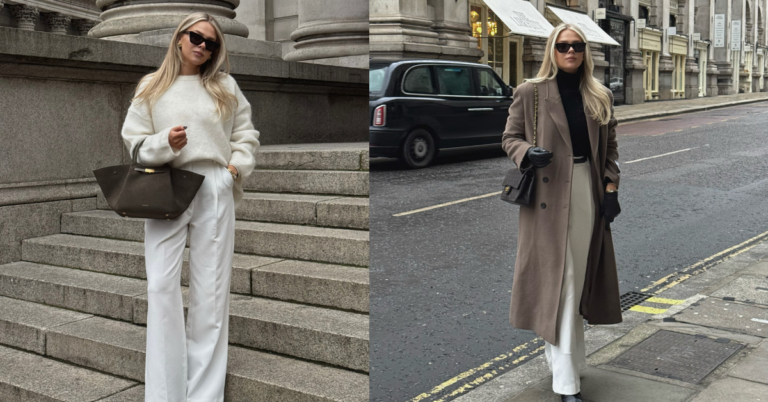

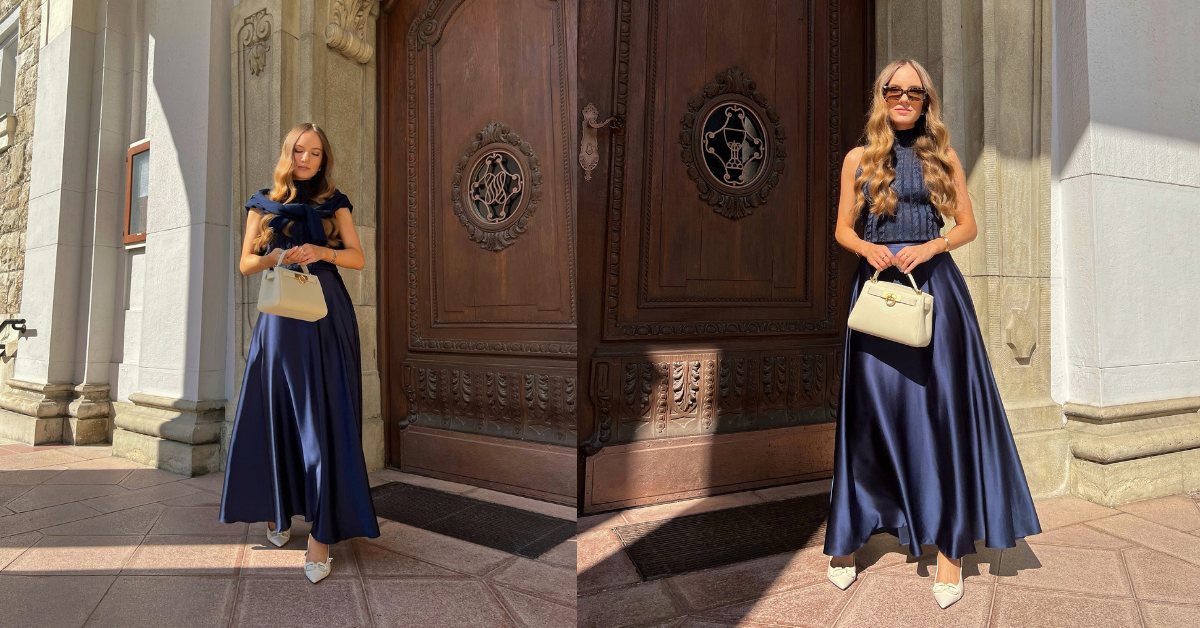
A church wedding is two things at once: a celebration, and a religious service. That mix is exactly why guest outfits can feel weirdly stressful. You want to look wedding-appropriate (polished, photos-ready), but you also do not want to feel like you’re dressed for a nightclub inside a sacred space.
The good news is you do not need a whole new wardrobe. Most “church wedding appropriate” outfits come down to a few simple coverage choices (usually shoulders, neckline, hemline), plus fabrics and styling that read elegant instead of attention-grabbing.
Also, different churches handle this differently. Some parishes are relaxed. Others are strict. Even Catholic weddings vary by church and family expectations. So the goal is not perfection. The goal is to look respectful in the ceremony and still feel like yourself at the receptionQuick answer for skimmers
- Default to semi-formal to formal unless the invite clearly says casual.
- Cover your shoulders for the ceremony (dress with sleeves, blazer, cardigan, or a wrap you can take off later).
- Aim for knee-length or midi (or longer). If it’s shorter, balance with a higher neckline and sleeves.
- Avoid deep plunges, cutouts, super high slits, sheer panels, and anything bodycon that feels “night out.”
- Men: if you’re unsure, wear a suit or blazer + dress trousers. A tie is a safe upgrade.
- Shoes: prioritize quiet + stable (church floors, steps, long standing time).
- Bring a “just in case” piece: a wrap/shawl solves most dress-code anxiety in 10 seconds.
If you only do one thing: bring a lightweight wrap or structured jacket. It gives you instant ceremony-appropriate coverage and you can change the vibe later.
The decision framework (how to choose without overthinking)
Use this 3-part filter:
1) Match the wedding formality first
Start with the usual wedding dress code rules (then adjust for church).
- Black tie: floor-length gown or very elevated midi, luxe fabric, more structure. Men: tux or very dark suit depending on invite.
- Formal: midi or floor-length, refined fabric, minimal skin. Men: suit, tie recommended.
- Semi-formal / cocktail: midi dress, dressy jumpsuit, dressy separates. Men: suit or blazer + trousers.
- Dressy casual: “Sunday best.” Think polished, not denim-and-sneakers.
If you are torn between two levels, go one step dressier for church. It rarely looks wrong.
2) Adjust for the ceremony space
Church weddings usually reward a more covered, composed silhouette.
Common expectations you’ll see:
- Shoulders covered (or covered once you’re inside).
- Not too short (often knee-ish is the safe zone).
- No obvious lingerie vibes: corsetry on display, sheer bodices, extreme cutouts.
- Head coverings: sometimes optional, sometimes expected depending on tradition and church. For example, some Orthodox communities keep the custom, others do not, and many explicitly say to check the parish.
3) Choose one “anchor” and build around it
Pick one anchor item, then keep everything else simple.
- Anchor: midi dress (easiest)
- Anchor: tailored suit
- Anchor: dressy jumpsuit + coverage layer
- Anchor: silky skirt + blouse
I usually tell people to stop chasing variety for church weddings. One great default outfit formula beats ten “maybe” outfits that make you second-guess yourself.
5 common mistakes (and easy fixes)
- You buy a sleeveless dress and forget the ceremony layer.
Fix: keep a wrap in the car or your bag. A structured jacket also photographs better than a random hoodie-cardigan. - You go “modest” but end up looking casual.
Fix: modesty is about cut, not dowdy fabric. Upgrade with crepe, satin, jacquard, wool blend, or a clean tailored fit. - Your shoes make you miserable.
Fix: block heel, wedge (not beachy), or dressy flat. Expect standing, steps, and long walkouts. - You look great seated but not when you move.
Fix: do the “real life test” at home: sit, stand, walk, lift arms, bend slightly. Check for gaping, riding up, slits opening too high. - You dress only for the reception and feel exposed in church.
Fix: style in two modes: ceremony (layer on) and reception (layer off).
Step 4: The core principle that makes outfits “faith-appropriate” (without feeling frumpy)
Here’s the principle: more structure, less exposure.
That does not mean you have to cover every inch of skin. It means you choose silhouettes that read intentional and respectful inside a sacred setting.
A simple way to nail it:
- Higher neckline or sleeves (pick at least one)
- Hem at knee/midi/maxi
- Fabric that holds its shape (not clingy, not sheer)
- One focal point (color OR print OR jewelry, not all at once)
This won’t work if the wedding is explicitly black tie and you show up in a cotton sundress with a cardigan. You might be covered, but you’ll still look underdressed.
Ceremony-to-reception styling routines (the “application” part)
If you already have a routine that works, you can skip this section and go straight to the variations below.
The 2-minute “coverage upgrade” routine
For women or anyone wearing a dress:
- Put on the dress you love.
- Add one of these for the ceremony:
- cropped blazer
- structured cardigan
- tailored wrap
- chic shawl/pashmina
- Keep jewelry simple in church (studs, small pendant).
- For reception photos: remove the layer, add lipstick, swap earrings.
For men or anyone in suiting:
- Suit or blazer + trousers.
- Add a tie if the church feels formal, traditional, or the couple is conservative.
- Make sure shoes are truly dress shoes (not sporty “dress sneakers”).
The “I’m traveling and packing light” routine
- Choose one outfit that works in the church.
- Bring one add-on that changes the vibe:
- statement earrings, nicer clutch, dressier shoes, or a tie swap.
The “I don’t wear dresses” routine
A very clean formula:
- tailored wide-leg trousers
- elegant blouse (not sheer)
- blazer
- pointed flat or low heel
It reads respectful and modern, and you never have to worry about hemline or sitting.
What’s different by faith tradition (quick, practical notes)
Not every church wedding is the same. These are general patterns you’ll run into, and they’re why the “bring a layer” strategy is so useful.
Catholic church weddings
Many Catholic churches and families prefer guests avoid overly revealing looks, and it’s commonly suggested to bring a shawl or wrap to cover shoulders if needed.
Orthodox church weddings
Some Orthodox parishes keep older customs (like women in skirts/dresses and optional head coverings), while others do not. A common theme is: check the parish, and err on the side of modest.
Latter-day Saint weddings (LDS)
LDS weddings can look different depending on whether you’re attending a temple sealing, a reception, or another ceremony. Many guides recommend leaning into modesty standards for guest attire (higher necklines, sleeves, midi/maxi lengths).
For temple settings, official guidance emphasizes modest, covered styles (though guest logistics vary).
Jewish weddings in or near a place of worship
Jewish wedding dress codes often lean semi-formal or formal, and modesty expectations can vary from modern to very traditional. When in doubt, covered shoulders and polished attire are a safe baseline.
The best outfit formulas (with trade-offs)
1) The “can’t go wrong” midi dress + blazer
- Works for most seasons and most churches.
- Choose: crepe, satin, jacquard, lace with lining.
- Trade-off (no solution): if you hate sleeves and also hate layers, you may feel restricted. That’s just the reality of some church settings.
2) The elevated maxi dress + minimal jewelry
- Great for formal churches, black tie, and evening ceremonies.
- Watch for: high slits, open backs, sheer skirts.
3) A dressy jumpsuit + ceremony wrap
- Modern and comfortable.
- Make sure it’s tailored and not jersey-clingy.
- Bring a layer for shoulders.
4) Suit set (women or men) with a soft blouse/shirt
- Looks sharp and respectful.
- Easy to dress up with accessories or tie.
5) Skirt + blouse + cardigan or jacket
- Great if you want coverage without feeling matronly.
- Choose: midi skirt + tucked blouse = instant polish.
Variations by use case (so you can pick fast)
Best for conservative churches
- long-sleeve midi
- blazer over sleeveless midi
- suit with a modest blouse
(Keep necklines higher and hemlines longer.)
Best for summer heat
- breathable midi in cotton poplin or linen blend, but styled dressy
- short sleeves over sleeveless
- sandals only if they are truly dressy, not beachy
Best for winter
- long-sleeve dress + tights + closed-toe shoes
- wool coat that does not crush the outfit
- velvet or heavier crepe can look rich
Best for “I’m not sure what church rules are”
- a classic midi + wrap
- a suit + tie (or add tie just for ceremony)
This is the lowest-risk lane.
Best for postpartum or comfort-first
- wrap dress (with a camisole if neckline is low)
- stretch crepe midi
- block heel or dressy flat
Best for men who want the simplest answer
- navy or charcoal suit
- white or light blue shirt
- conservative tie
- dark dress shoes
You can always remove the tie later.
Quick “Yes/No” checklist before you leave the house
- Can I sit comfortably and stand without tugging?
- Are my shoulders covered or do I have a layer ready?
- Does my outfit look polished in daylight (most churches are bright)?
- Do I have quiet, walkable shoes?
- If the ceremony runs long, will I still feel comfortable and respectful?
FAQ
Can I wear sleeveless to a church wedding?
Sometimes yes, sometimes no. Many people solve this by wearing sleeveless and bringing a shawl, wrap, or jacket for the ceremony.
Do I have to cover my head?
Usually only if the church tradition or parish expects it. Some Orthodox churches describe head coverings as optional or tradition-based and advise checking the parish.
Are pants acceptable for women?
In many churches, yes, as long as they’re tailored and formal enough. Wide-leg trousers with a blazer reads very appropriate.
Can I wear black?
Generally yes, especially for evening or formal weddings. Keep the look celebratory (texture, jewelry, a softer blouse). If the culture is very traditional and you worry black reads “funeral,” choose navy or jewel tones.
Can I wear a short dress if it’s modest up top?
Sometimes, but knee-length or midi is the safer default for church ceremonies. If you go shorter, balance with sleeves, higher neckline, and opaque fabric.
What about open-toe shoes?
Usually fine if they’re dressy and the overall outfit is formal enough. Avoid casual flip-flops or super casual slides.
Is it okay to change between ceremony and reception?
Yes. But it’s usually easier to “transform” with layers and accessories rather than a full outfit change.
Do I need to buy something new?
No. This is optional. Skip it if you already have a polished outfit and can add a ceremony layer. A wrap and a blazer solve most situations.
Just a little note - some of the links on here may be affiliate links, which means I might earn a small commission if you decide to shop through them (at no extra cost to you!). I only post content which I'm truly enthusiastic about and would suggest to others.
And as you know, I seriously love seeing your takes on the looks and ideas on here - that means the world to me! If you recreate something, please share it here in the comments or feel free to send me a pic. I'm always excited to meet y'all! ✨🤍
Xoxo Alessandra